Urban Process Design

For a number of years Supertanker has organised a workshop for 1st year Students at the University of Roskilde. The workshop tries to include a number of elements into an intensive 2 weeks: Sensing, talking and taking space, from appropriation of their own space (here the old train station in Hedehusene) to spatial interventions in public space.

We also started (again) to work with mapping using technology. In this case we let the students use Twitter and a mashup with bing maps

Hedemarkedet and DIT

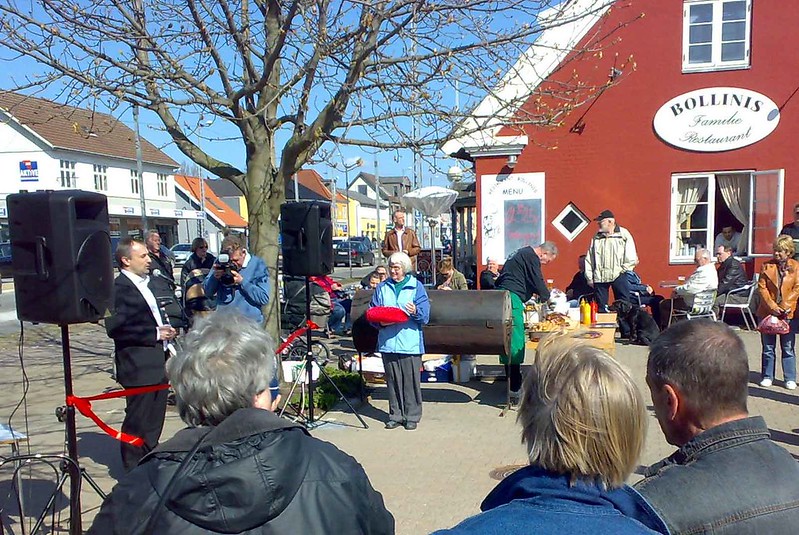
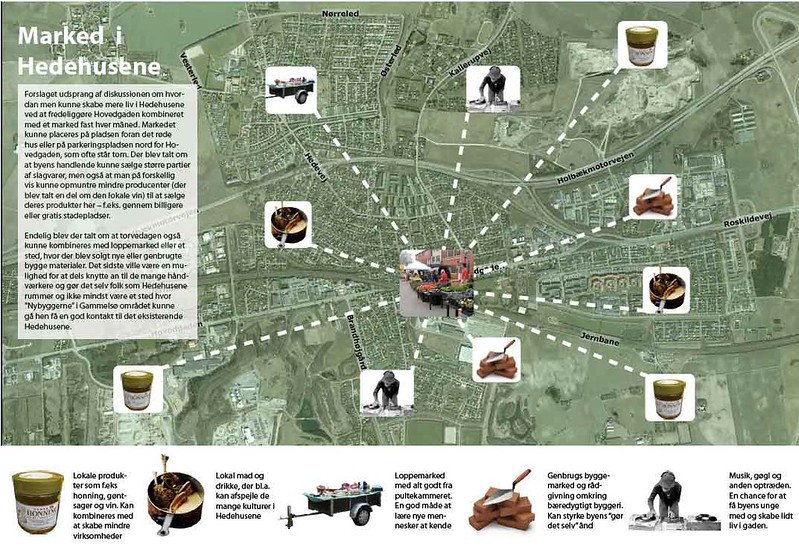
The wish to make a local market has been strong in Hedehusene for years but an art project that didn’t really have a market as its objective made local people meet and discuss the future of the town. Hedehusene has been loosing shops from the main street for years and the market thus fulfils a strong local wish for a more lively city.

Ebba-med-saksen

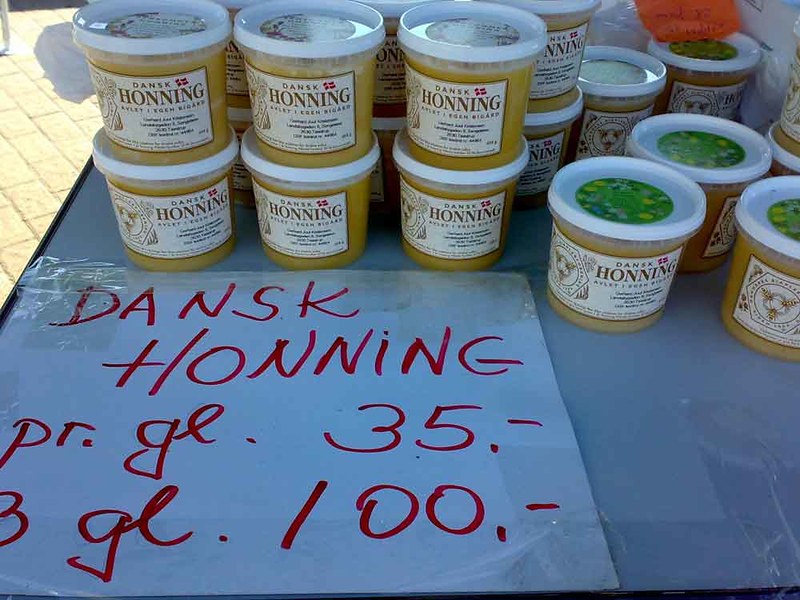
Locally produced honey

Honning

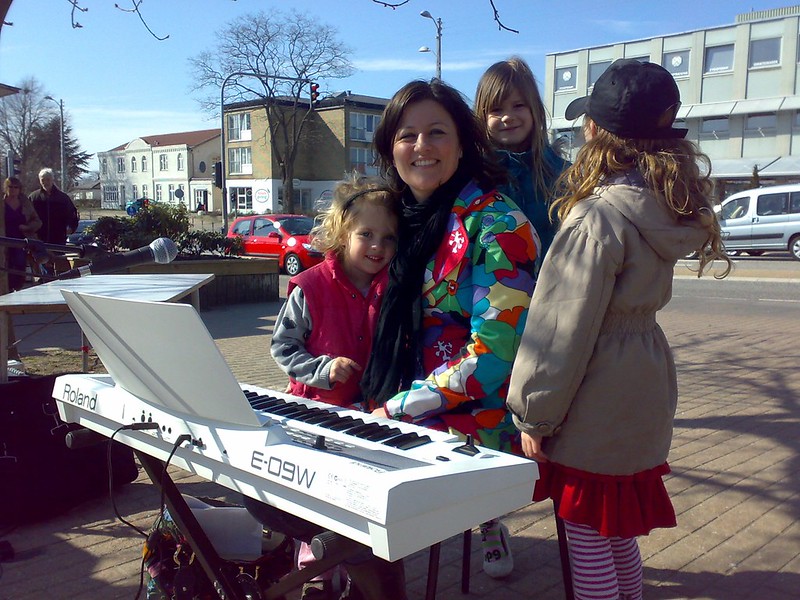
Local music

150420101720

At the opening the local mayor engaged in a fight with kids from a local roleplaying club.

Borgmesteren-slås

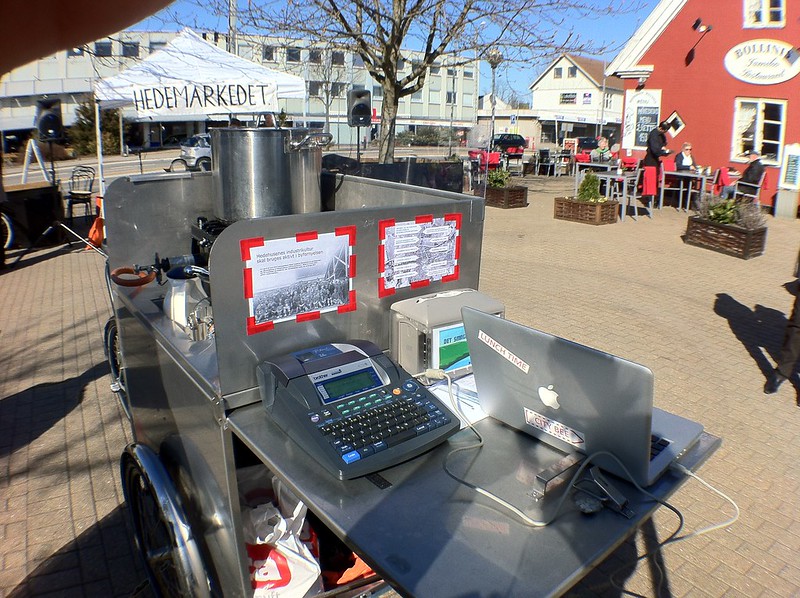
When we started our CiTyBee “prototype” it was obvious to do that on the first market day in 2012.

IMG_4258

A year after the opening of the market Supertanker made a “Do It Together – DIT” action there where we tried to design and build a prototype for a market stall “in and for public space”. This short movie documents the action and was used as our contribution to a conference “Urban Platform” organised by Citymine(d) in Brussels.

Sensing Hedehusene

The Project “Sensing Hedehusene” was not a Supertanker project but by the UK mapping artist Christian Nold. We were engaged in a parallel participatory process that should ensure, that the results were relevant locally. That part was very important since it resulted in the seed for a local offshoot: a monthly market that began the year after.

Workshop5

In short the project placed a number of sensors that measured pollution and noise – and had three buttons that made it possible to vote.

DSC_0204

The results of the pollution and noise measurings where shown as colours on a big balloon.

DSC_0246

The technology did not really catch on locally but all the buzz created by involving the local mayor and important persons from the culture industry in Copenhagen created a “critical mass” of local people that started discussing the future og the small community.

DSC_0198

And the outcome of that discussion was to work for 2 ideas: a local market – this idea was made real the year after in 2010 and is a good example of a local offshoot :

Marked_thumpnail

The second idea was to create a local place to meet in the old train station – which is slowly becoming a reality:

Mødested_thumbnail

The whole process – both the part run by the artist and the involvement of local people is documented on this website (in Danish)

See a short video here – both in English and Danish

Super Site Specific

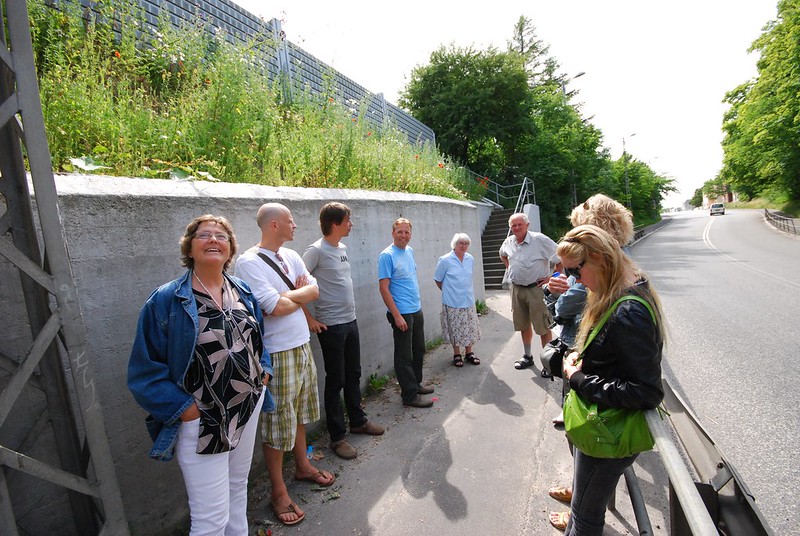
In a collaboration with a local theatre we played with the idea of making theatre more urban by making it Super Site Specific. We also wanted the workshop itself to be part of public space so thanks to Anders of Supertanker we got the different workshop groups out in public space like here on the train platform.

DSC_1391

An early example of mapping in a very low tech and concrete way. Very fast to make and very useful for discussing our views on the town of Hedehusene.

DSC_1480

One of the ideas from the workshop was to organise a market – mainly for building materials – to boost the DIY spirit of the town. The market idea would come back the year after – see more here

DSC_1433B

The other idea – and closer to Theatre was a local event where people in town could bring stuff on their trailers to a gathering where all the stuff could be exchanged. The trailers would be decorated and driven through town as a parade of local potentials….
DSC_1424A

See more Photos from the workshop here

Local Interaction

CiTyBee is an offshoot itself inspired by many of the experiments done in Supertanker. One of these experiments was a “Camp” – Local Interaction – that we held in 2007 as a way of starting a 5 year project in a social housing area in one of Copenhagen’s western suburbs.

“Local Interaction” set out to research the possibilities for ‘design as a positive catalyst in an everyday context’.

We had invited both local and international artist/architects etc and the 2 day workshop/Camp was a strong inspiration – also for the present ideas in CiTyBee.

Before the Camp we held a workshop with kids from the local school in order to get their stories and ideas. This formed the starting point for the Camp.

This invite outlines the intentions of the camp and this  program gives an idea how we structured the Camp.

Some of the sketches from the workshop can be seen here and a more thorough report can be found here.  Many of the conclusions in this report are the seeds that led to CiTyBee.


Street Whiteboards

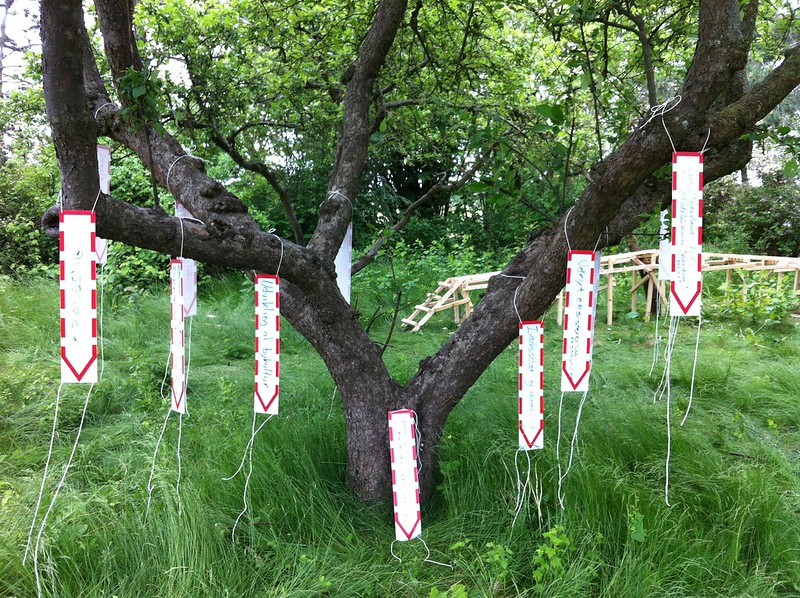
Our “Street Whiteboards” have been very useful in our efforts to make the dialogue about space more spatial. Like the stickers it documents keywords from previous stories and thus make the dialogue more dynamic and concrete.

IMG_4344

It is gradually taking or appropriating the space and in turn, making it possibile to make it (or another space) more real.

IMG_4342

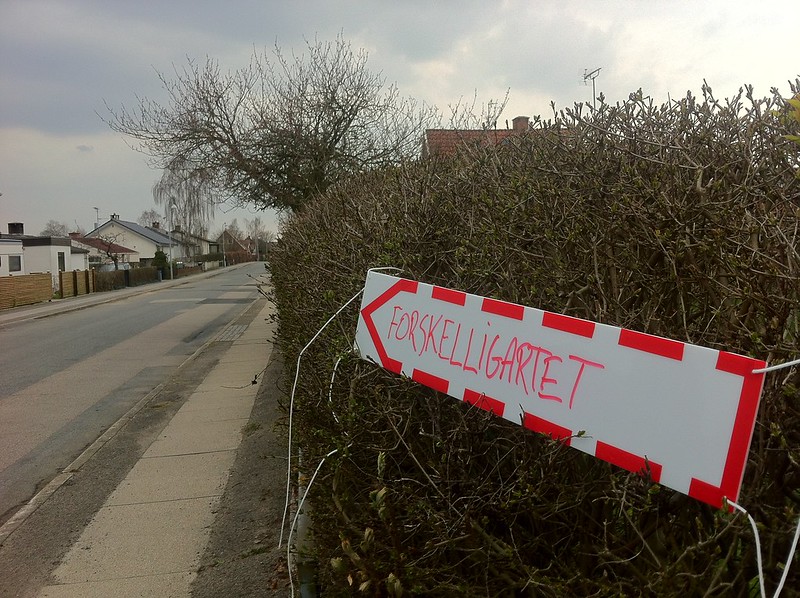
They can be used as our own signage in a way that starts creating a situation where people can see that something unusual is happening in an otherwise well known space.

IMG_4527

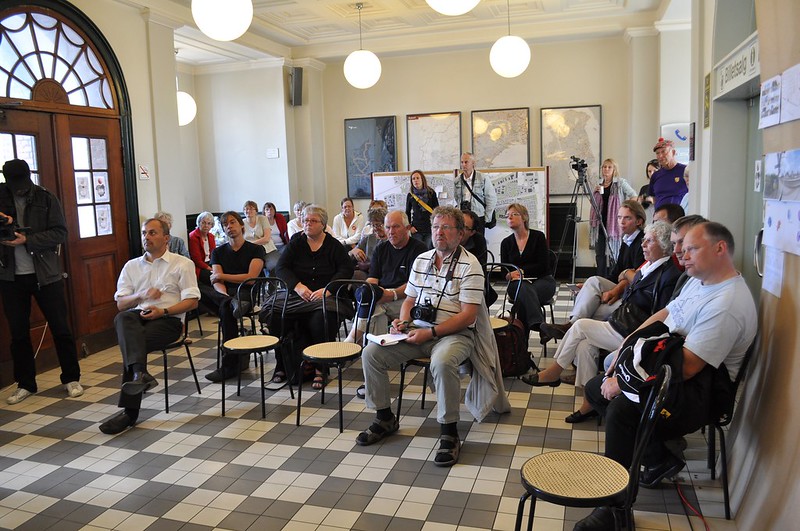
Here we use it at an outdoor public meeting

IMG_5159

IMG_5197

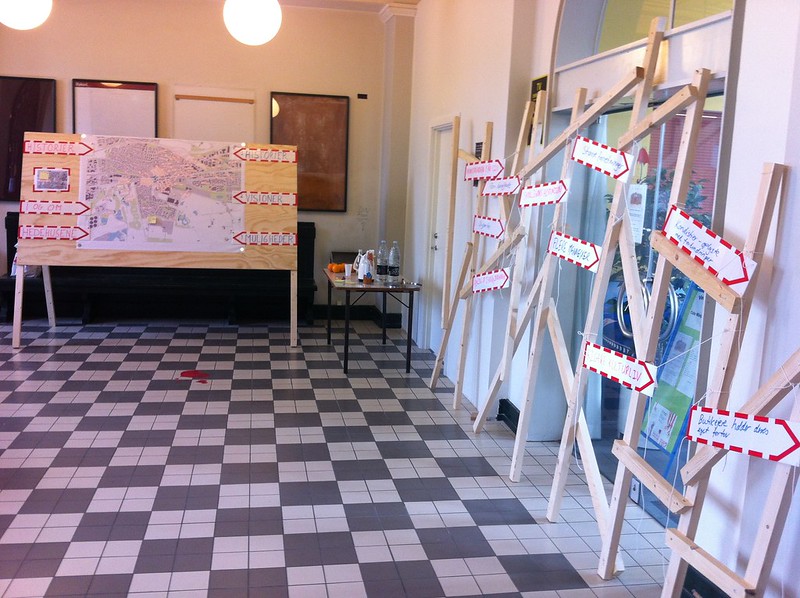
And an indoor public meeting

IMG_4469

IMG_4502

Stickers

Our use of Stickers is linked to our mapping experiments. These include working with Yellow Arrows where the stickers had a unique SMS code. See a short (danish) movie here or read an article in NYTimes where our work is referenced.

We have an advanced portable printer so stickers can be printed out on the go. This is a more direct and fast way of communicating in and about public space.

IMG_4258

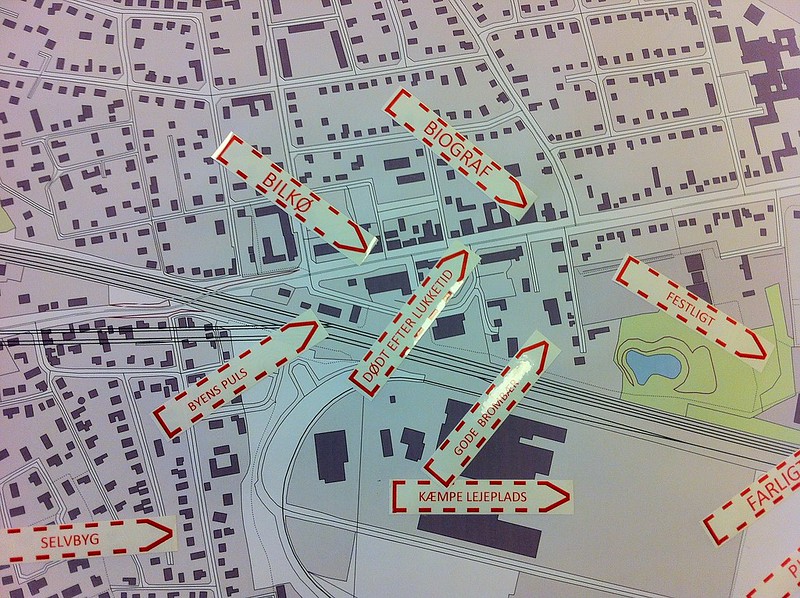
First time we used it we were participating in the local market with a large map on a board that encouraged people to tell stories about places in Hedehusene.

IMG_4271

The stickers would immediately document the stories – giving them some “weight” – and encourage people to comment on what had been said before them. A very simple way of showing how the same place can be seen in many different ways by different people.

IMG_4348

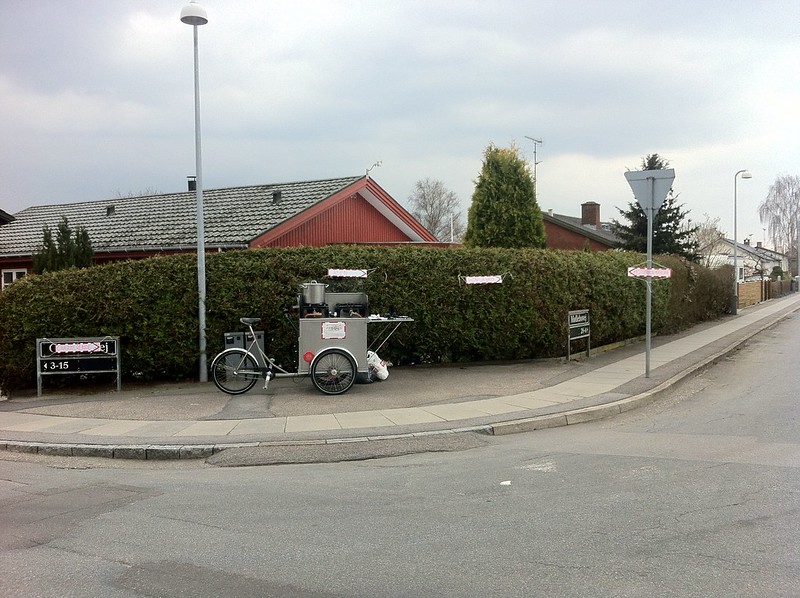
On our tour through town we would use the stickers to tag the different places we stopped.

IMG_4538

Or add QR codes that would link to stories that were documented on video. This one is a story about the nightmare of heavy traffic when they started to transport goods on big trucks instead of train transport.

IMG_4991

Materials

We collaborated with the builders in the Cooperative Maj. On their recommendation we found some simple combinations of materials that are very easy to work with without being a skilled Craftsperson.

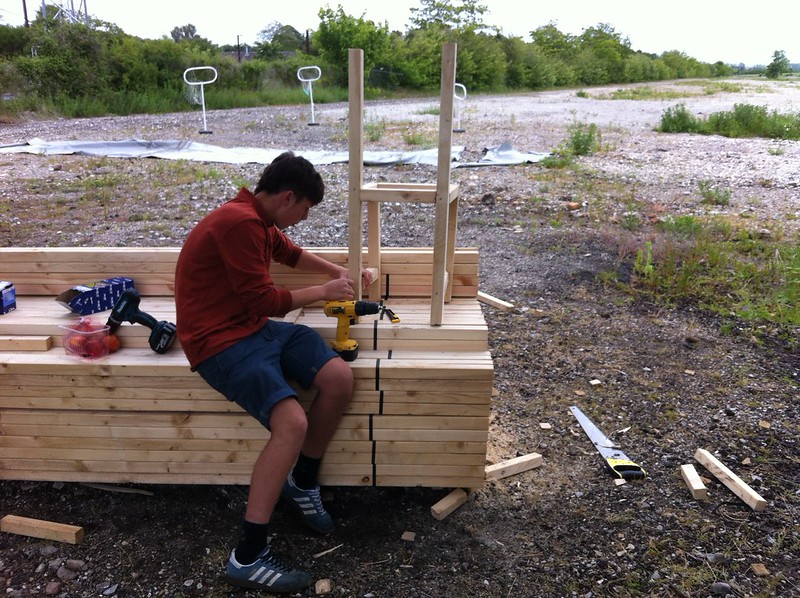
We work with 2 by 2 timber and special type of screws that partly drill themselves through the wood to avoid it from splintering. The timber is rounded on all edges and very fast too cut.

If timber and screws make the “skeleton” of a construction then Tarpaulin makes the skin. We both use recycled stuff (like the Freitag bags) and leftover pieces. Tarpaulin is an amazingly strong material. These materials can be combined in a number of ways and incorporate local materials.

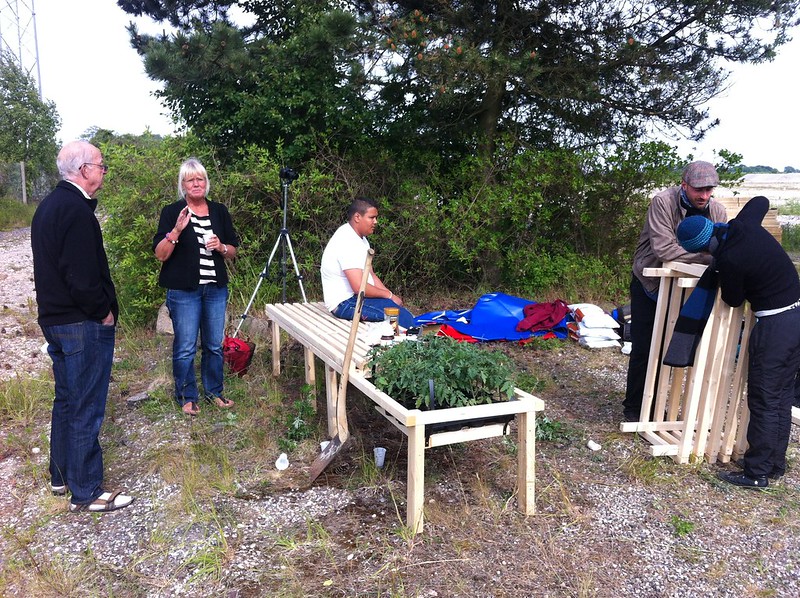
Behind the practical aspects lies the wish to free the possibilities in a community by collaborating and communicating – building together. Appropriating or “taking” a space by actually building something on the spot instead of – or as a part of – discussing what could happen there.

Screws

IMG_5107

Wood

IMG_4917

Tarpaulin

IMG_5096

Here are some examples of we have build so far:

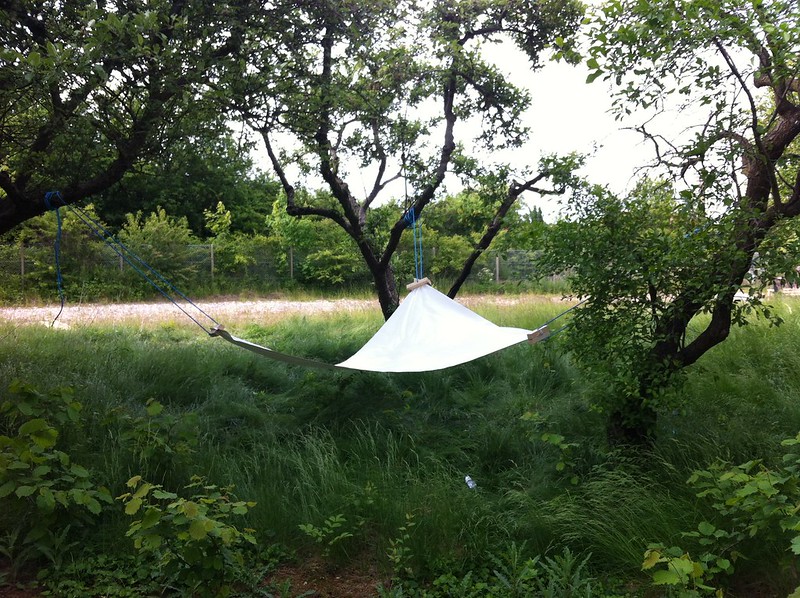
Hammock

IMG_5119

Pots for tomatoes etc

IMG_5110

Table and bench with build in Tomatoes

IMG_5092

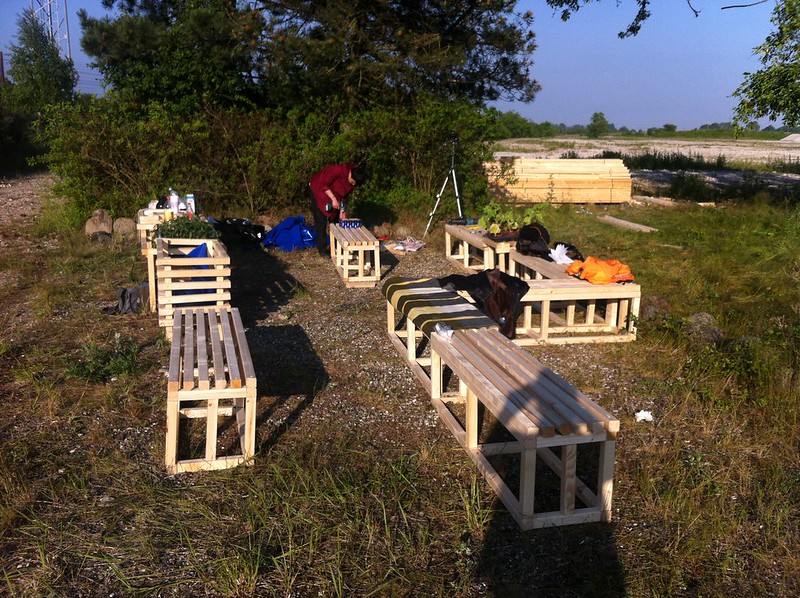
Benches for public meetings etc.

IMG_5100

Chair

IMG_5184

IMG_5222

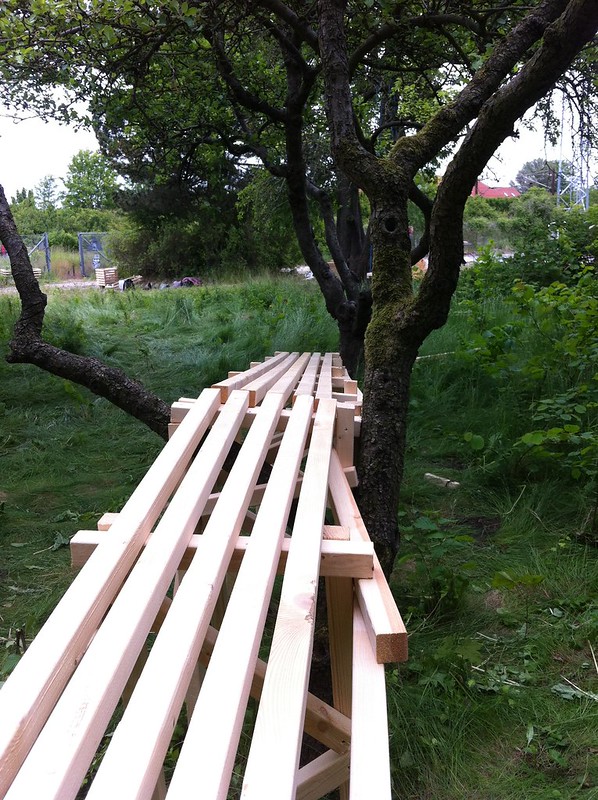
Walkway

IMG_5205

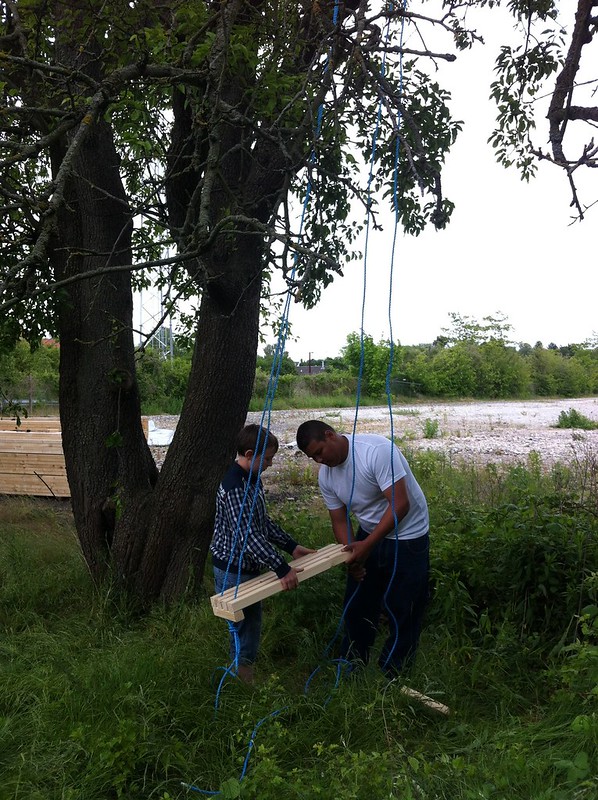
A swing

IMG_5082

And experiments

IMG_5112

Local Interaction Sketches

Here you can see some of the sketches from the workshop. Many of them have become reality in the meantime. In the Social Housing area we choose to renovate an old Cirkuswagon that became an icon for that project. For CiTyBee we choose a more mobile Street Kitchen which in some ways resembles the “Peacock” in some of the sketches.


Local Interaction

After years of insufficient funding, Supertanker’s Urban Task Force (UTF) was, in 2007, given the green light for a five year experimental and research-based social housing project in the suburbs of Copenhagen with approximately 2000 residents.

The area was built in the late 70’s where funding was low for social housing. On top of the rather low quality of the physical structure, the Charlotte Quarter has all the hallmarks of modern planning being mono functional and socially and culturally segregated from the surrounding small town.

This small town, Hedehusene, is dominated by a vanishing building material industry and a large presence of carpenters, bricklayers, etc., and in general a DIY spirit. One of the problems of the Charlotte Quarter is the pacifying mechanisms that are typical in such social housing projects. Main reasons for this are the self ruling local housing boards. These housing boards act as breeding ground for small and sometimes large conflicts that block many new initiatives and especially the inclusion of younger people from the community who could bring something new to an aging group.

The list of problems that these mono functional, segregated and rather passive/pacifying neighbourhoods have is long and well known. One example of how the compartmentalised thinking is reflected in the Charlotte Quarter is the way the social housing has been renovated over the last couple of years.

The buildings were in serious need of repair and a respectable architect office took care of the project. Stairways became lighter and larger and balconies were glazed, but the renovation was in no way connected to the social issues of the quarter: many young people have a hard time getting a job being stigmatised by their address, name or skin colour. We asked the electricians, entrepreneurs, etc. involved  in the renovation and they were in principle positive to engage a number of these young people, but this more holistic way of combining the physical and social needs of an area had never been considered.

The project of Supertanker’s UTF  was called ´The best of the Charlotte Quarter´. The focus was on social and preventive measures that could bring about a positive change to the area. As such we proposed to work with media, set up a local TV station and work with school children to discover their views on the green spaces in the neighbourhood. Our project was not supposed to fund any physical initiatives unless they had a social aspect, for example enabling citizens to build their own gardens. Yet we did have one building project in the scheme design – our own base where we could make a physical mark in order to be visible in the neighbourhood.

‘Local interaction’, as the project was called, set out to research the possibilities for ‘design as a positive catalyst in an everyday context’. We began by holding workshops with local children, the focus of our research, to find out what they wanted from the area. As we might have expected, they wanted more places to meet – small shops, markets, an outdoor cinema, more sports facilities, and not least of all, a place for girls to be on their own. These findings were then taken into a more international context in a workshop to which we invited architects and artists from Denmark and all over Europe. The wishes of the local children were then translated into three alternative design solutions for our base, each of which would allow it to be moved around the area to attend or spark events, and be easily accessible for people to drop by.

Read more here

Read a full report (in danish) here